Unified Platform
Design System
Unified Platform Design System
Dozens of products all under one design system
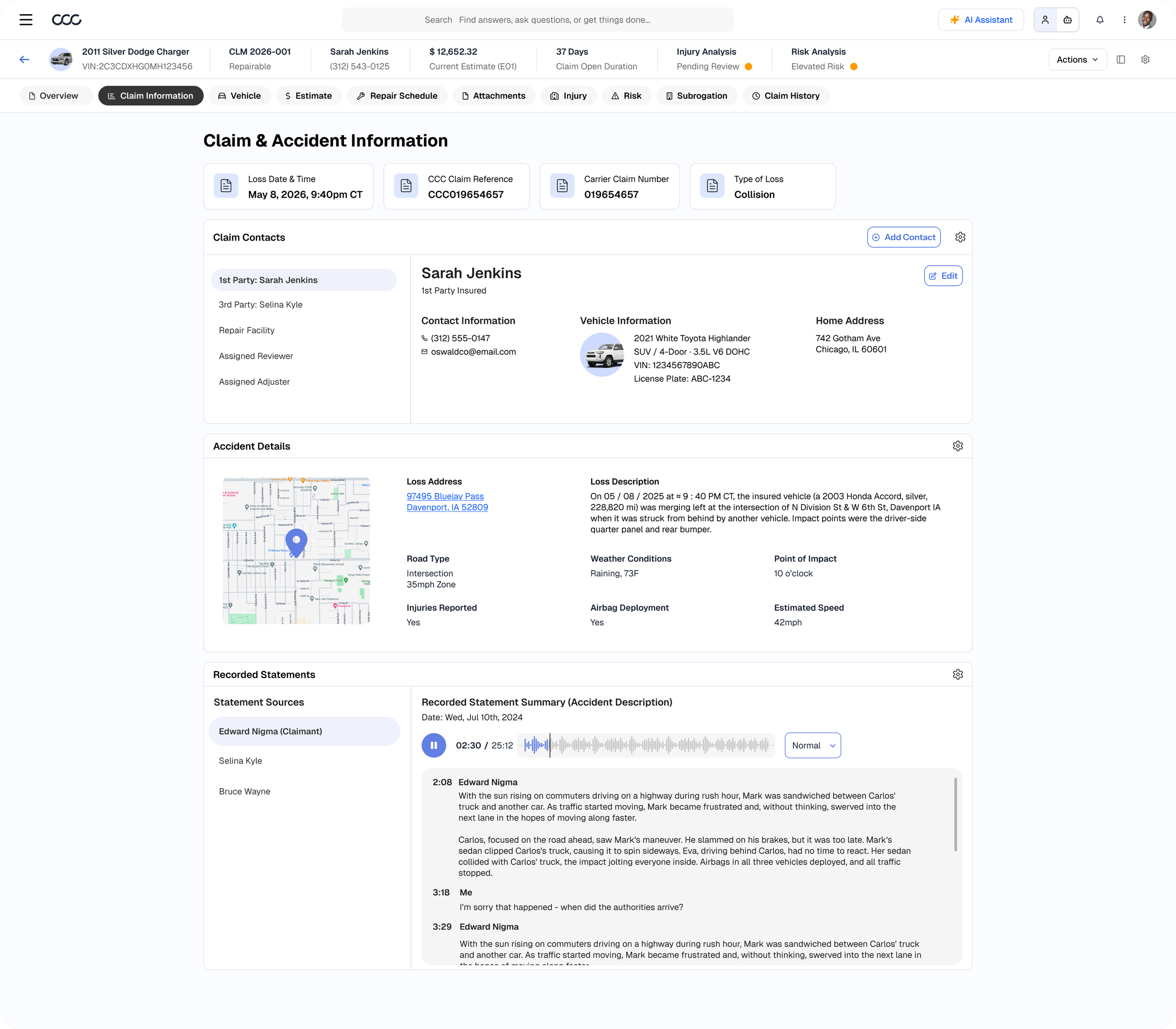
With the arrival of a new Chief Product Officer, CCC sought to revitalize their product portfolio and strategy with the breakout developments of AI tools in the insurance space. I and a fellow lead designer created a new unifying desktop design system that brings together multiple teams, new concepts, and existing business verticals into a single platform.
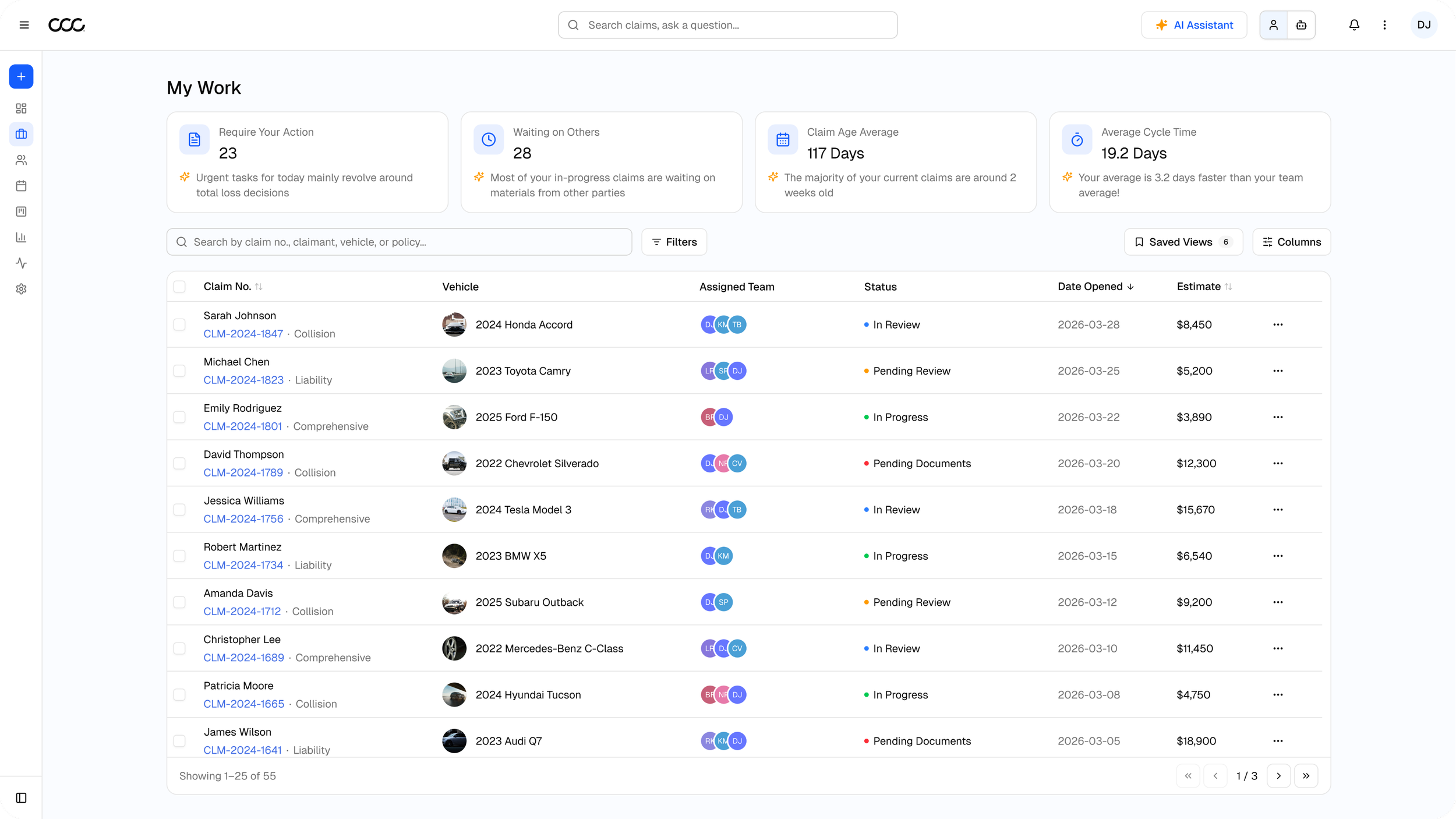
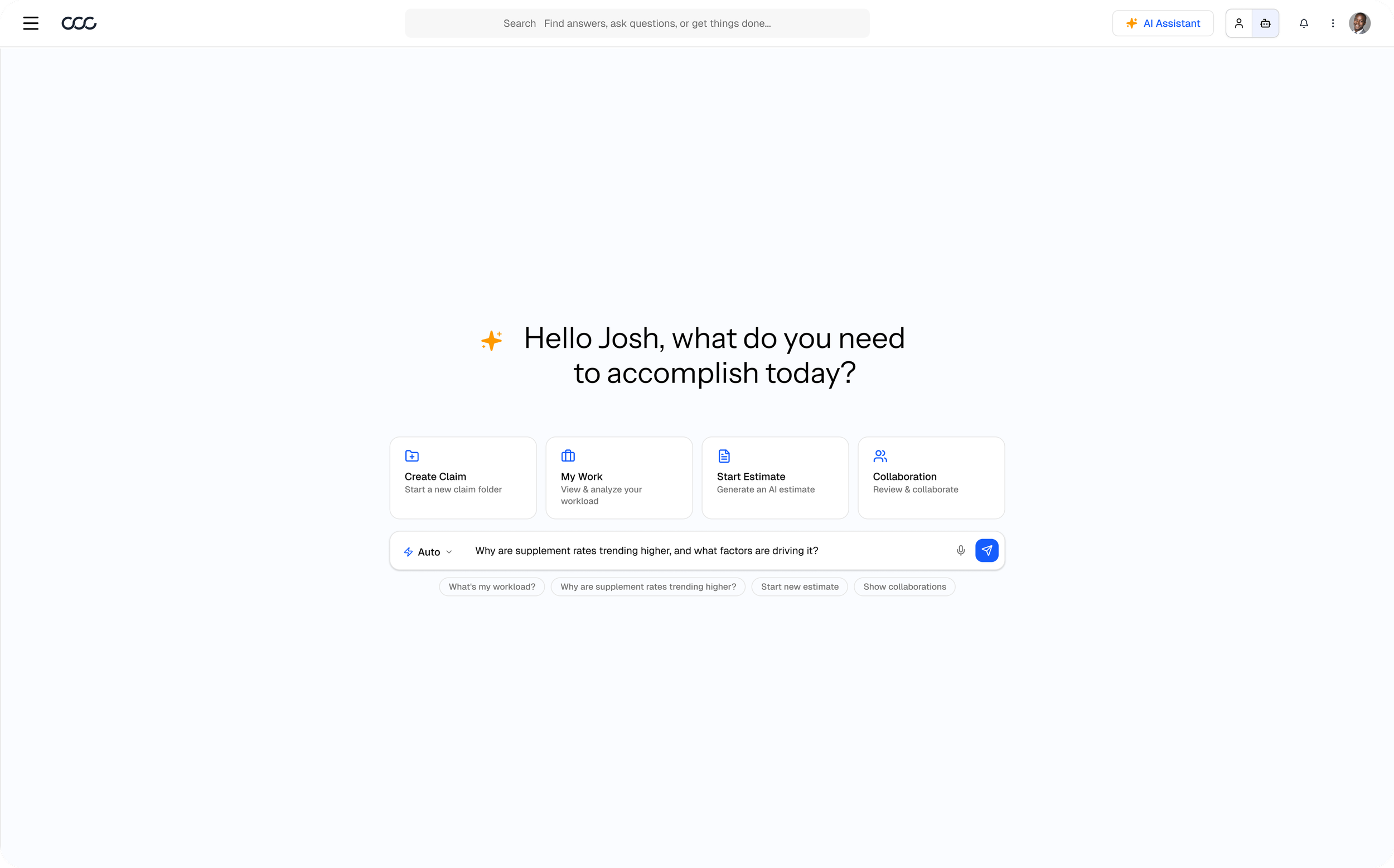
Lead Product Designer // Desktop Design SystemTaking Inventory of Existing Products
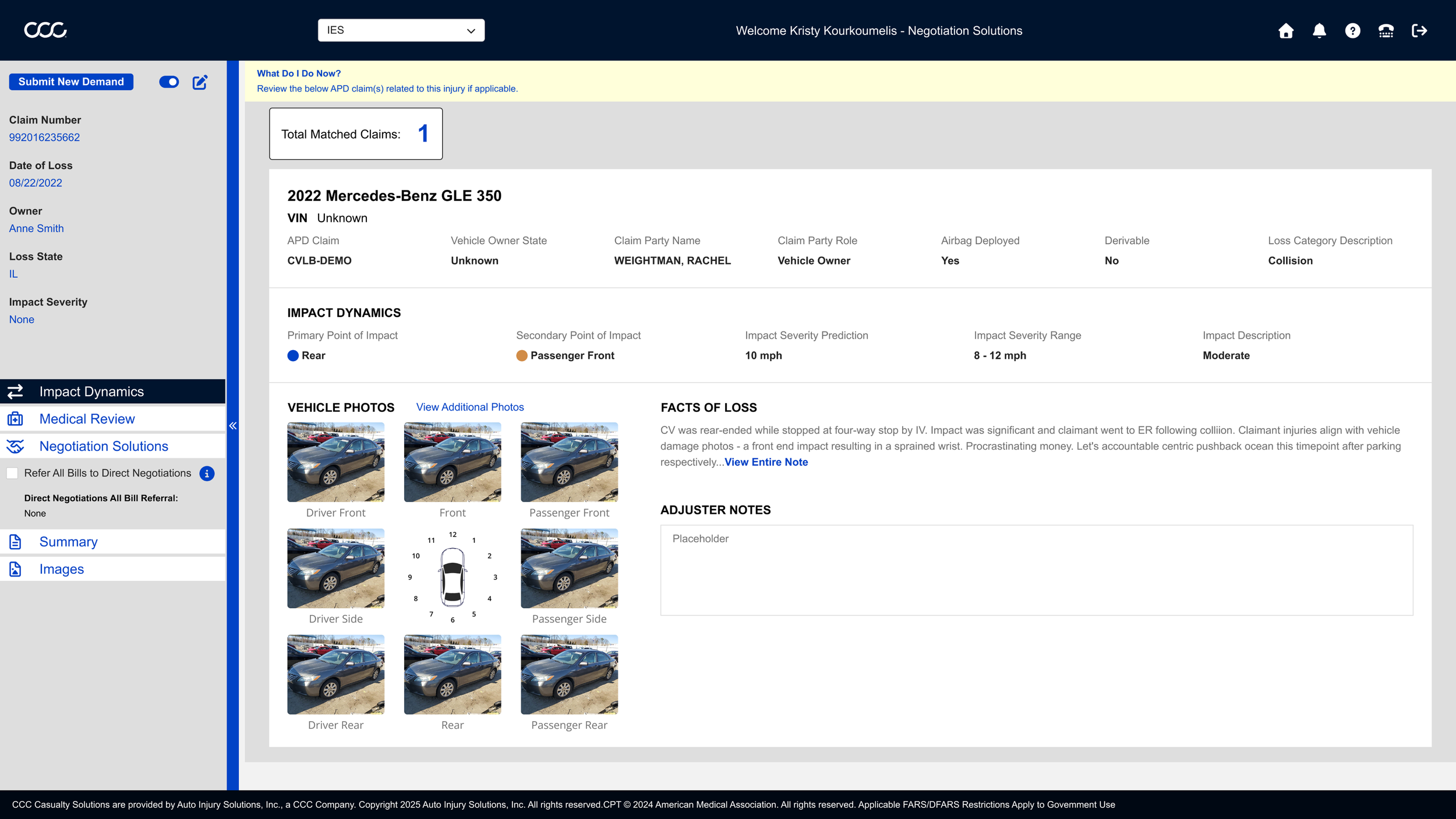
Medical Litigation
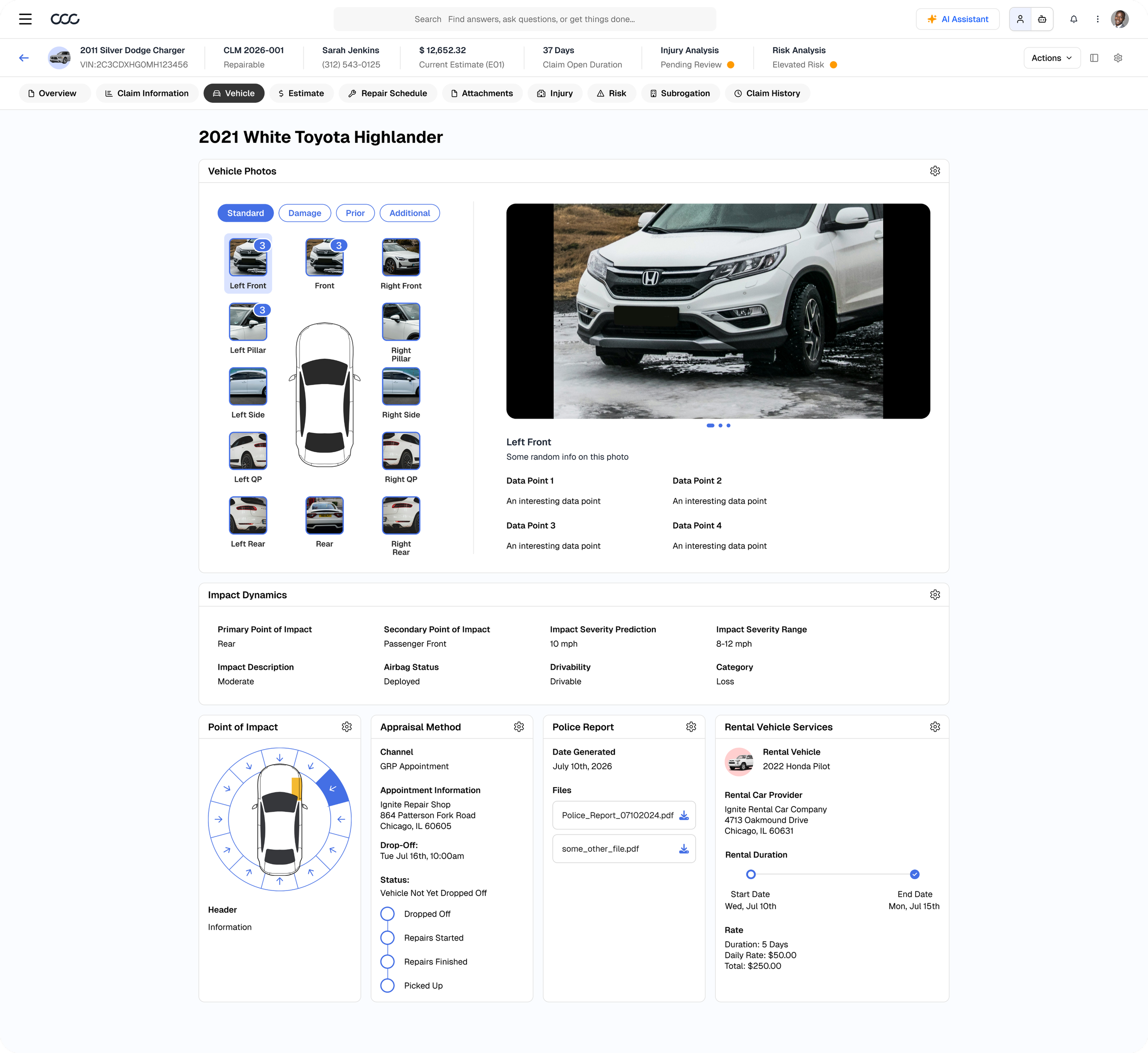
Impact Dynamics and Casualty verticals tackle the medical and injury side of the claims process, including payment negotiations, litigation, and analysis of the accident itself.
Fraud and Risk
The triage workspace takes claims and weighs the risk likelihood that this claim is fraudulent. Things like a claimant’s claim history, and features of the accident document artifacts are analyzed and compared for inconsistencies.
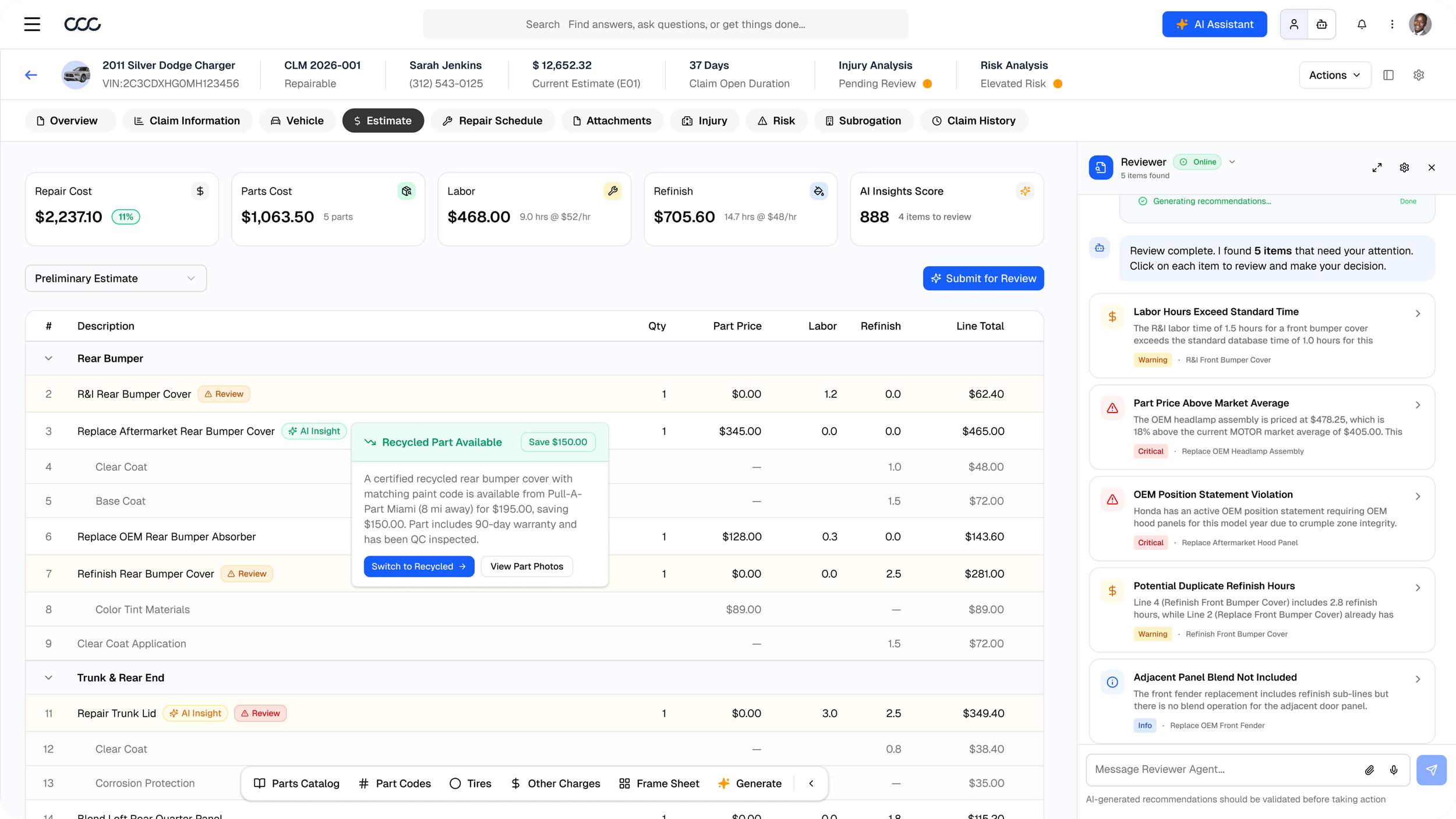
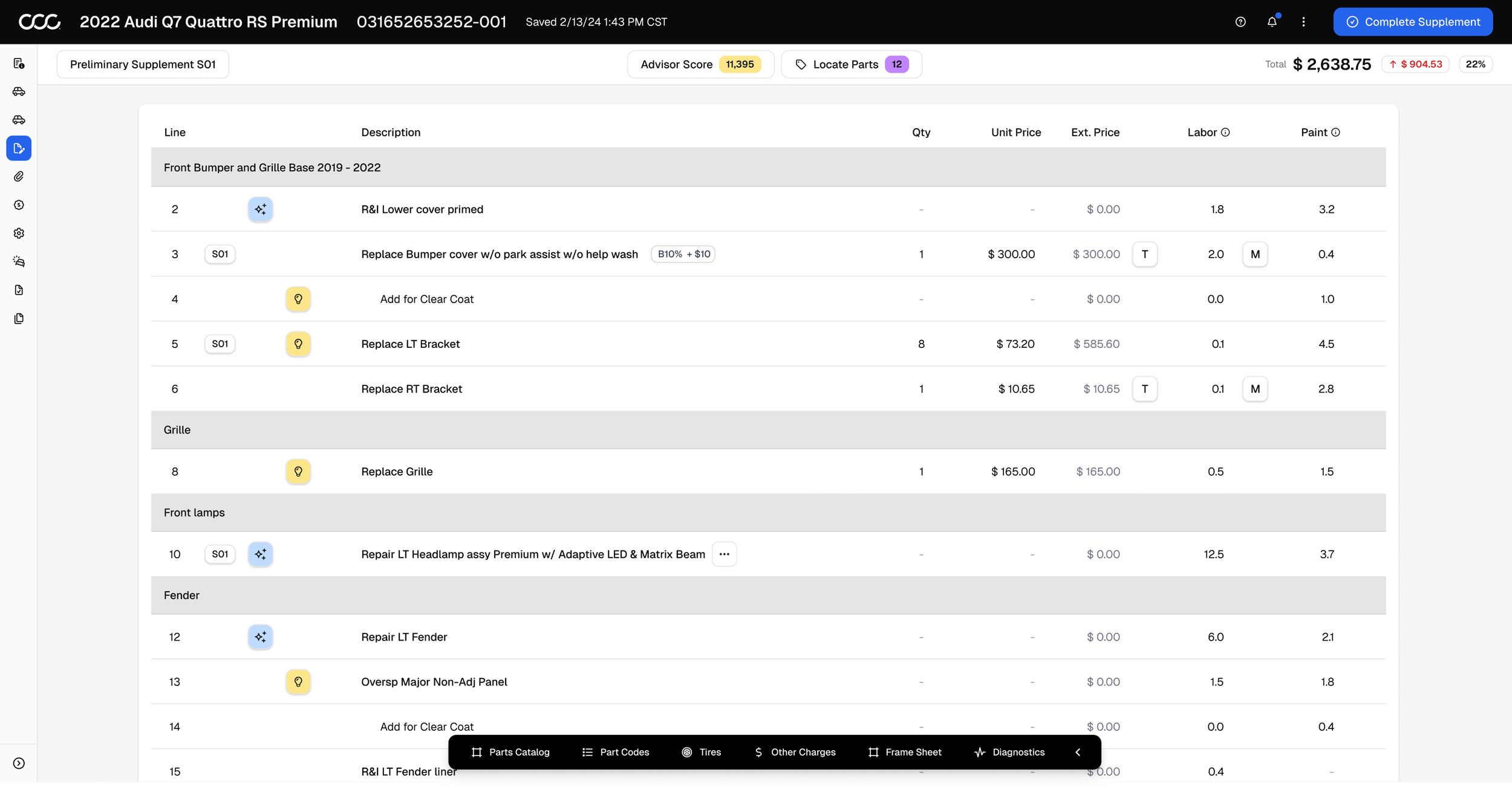
Creating a Repair Estimate
The appraisal experience provides an interface for the user to author an estimate thoroughly, including attaching photos, sourcing replacement parts, and predicting the cost of labor.
The first steps involved collaborating with designers across various portfolios and leveraging my own 7+ years of experience at the company to examine all of the products this design system needs to sustain. The scattered design elements and patterns were documented and compared to look for viable solutions that span across user experiences.

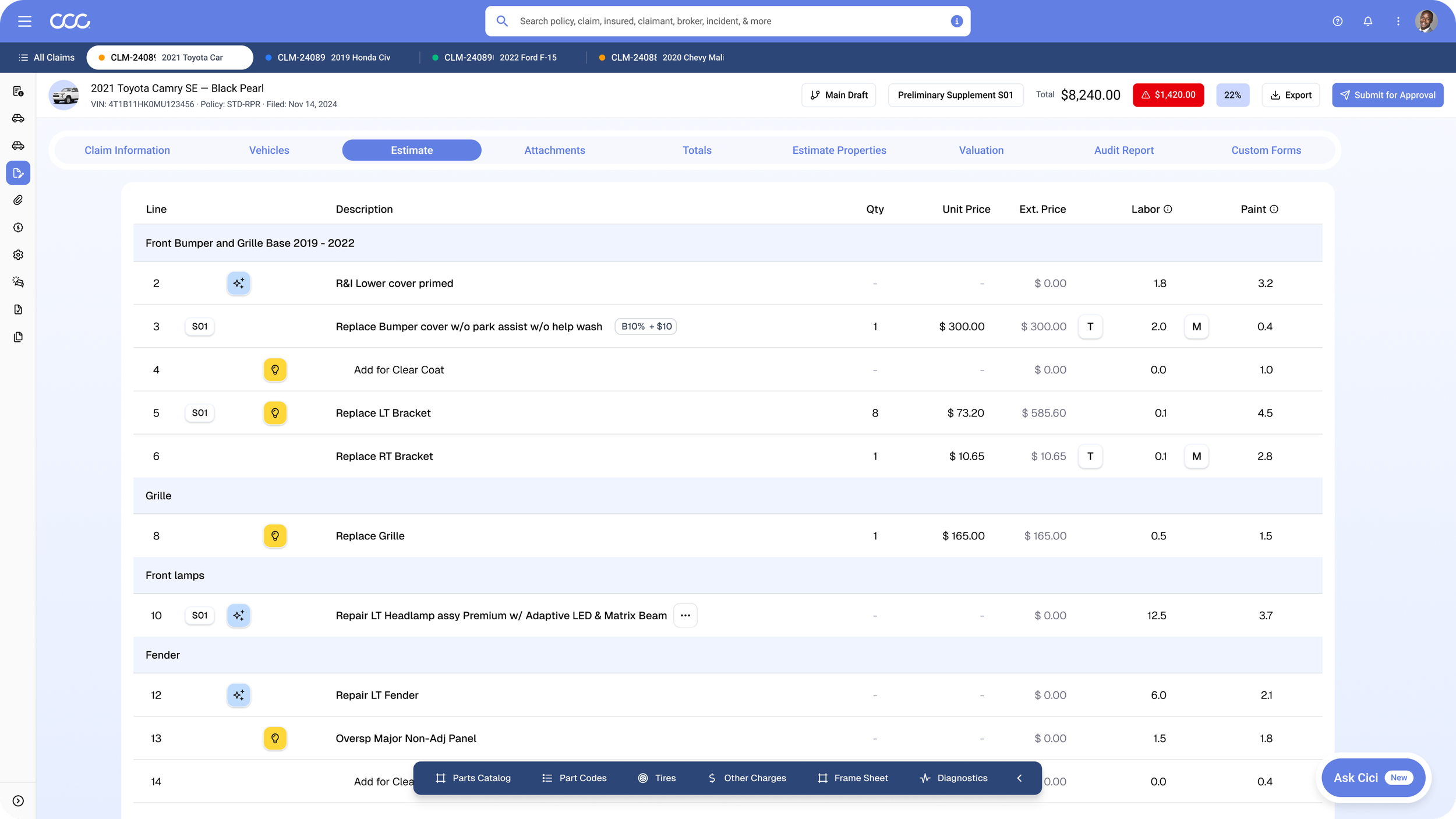
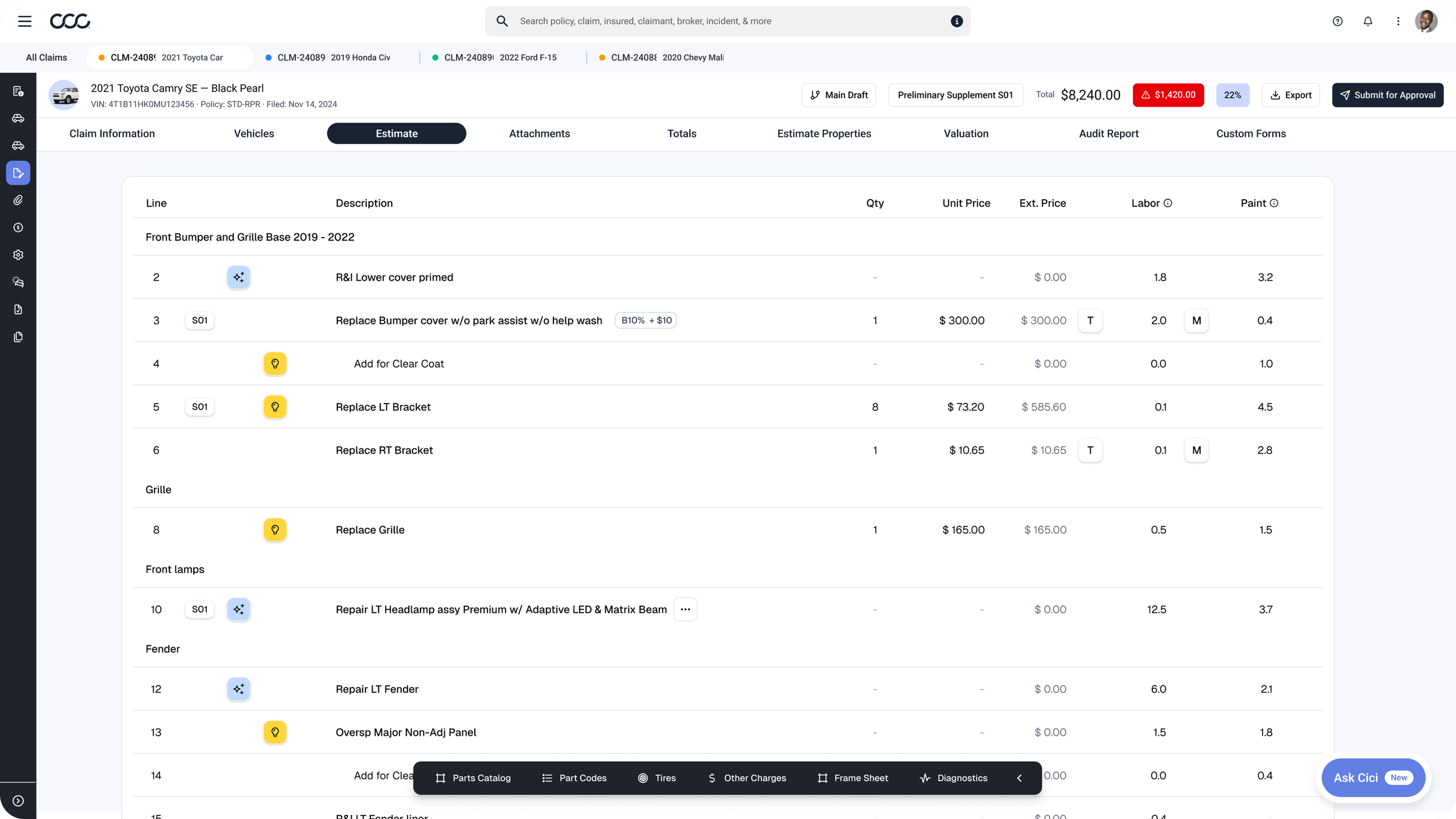
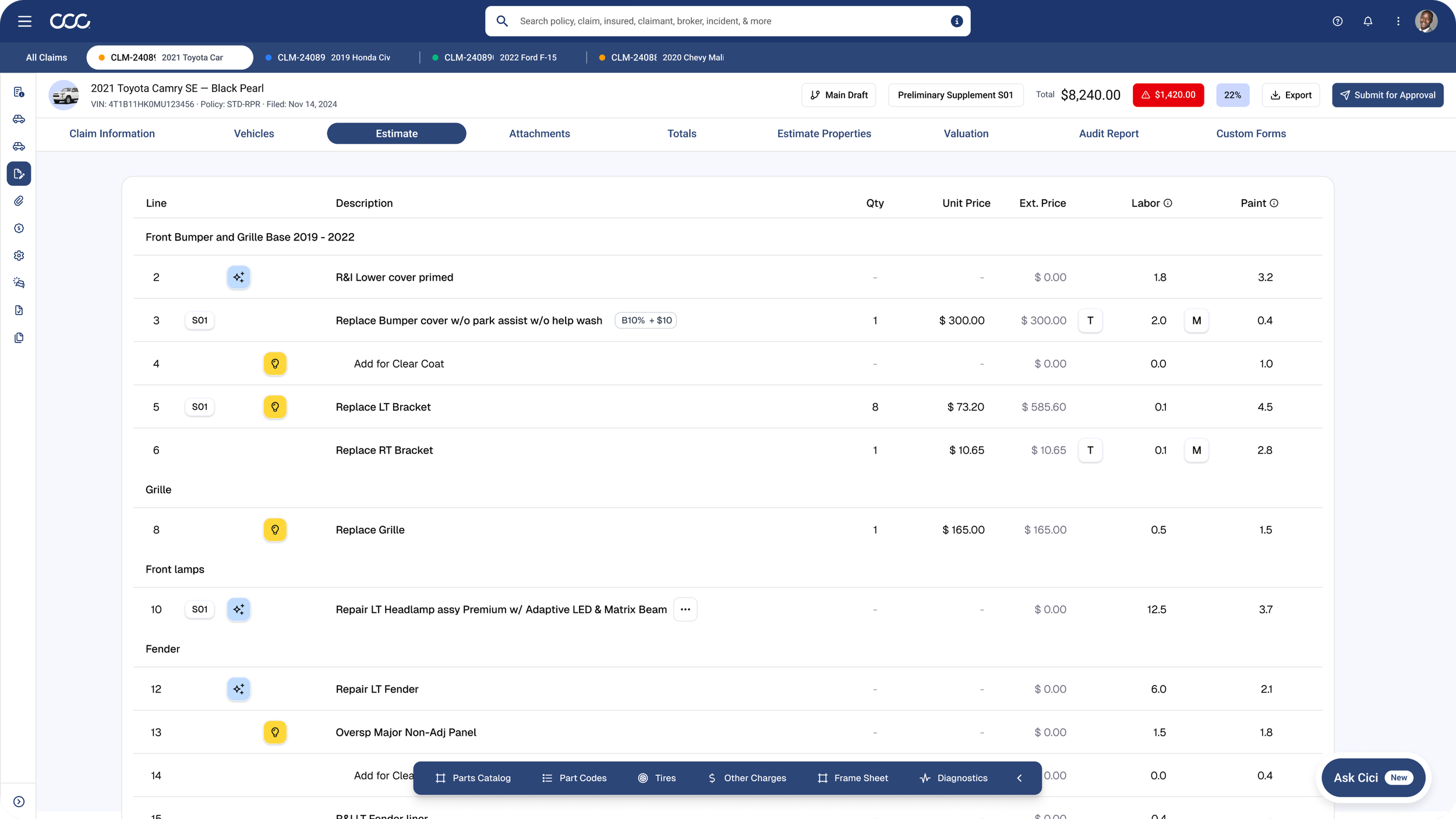
Exploration of Visual Designs & Aesthetic
Different approached to the overall visual language of CCC’s products overall were explored, ranging from more minimalist designs to ones that further leverage color theory and patterns.
Reinventing the Claims Handler Experience
An important aspect of the new design system is a totally reimagined approach to how insurance adjusters handle their claim assignments and navigate their workflows. C-Suite level executives as well as product teams were consulted on brainstorming new UX that can drive change and innovation in the industry.
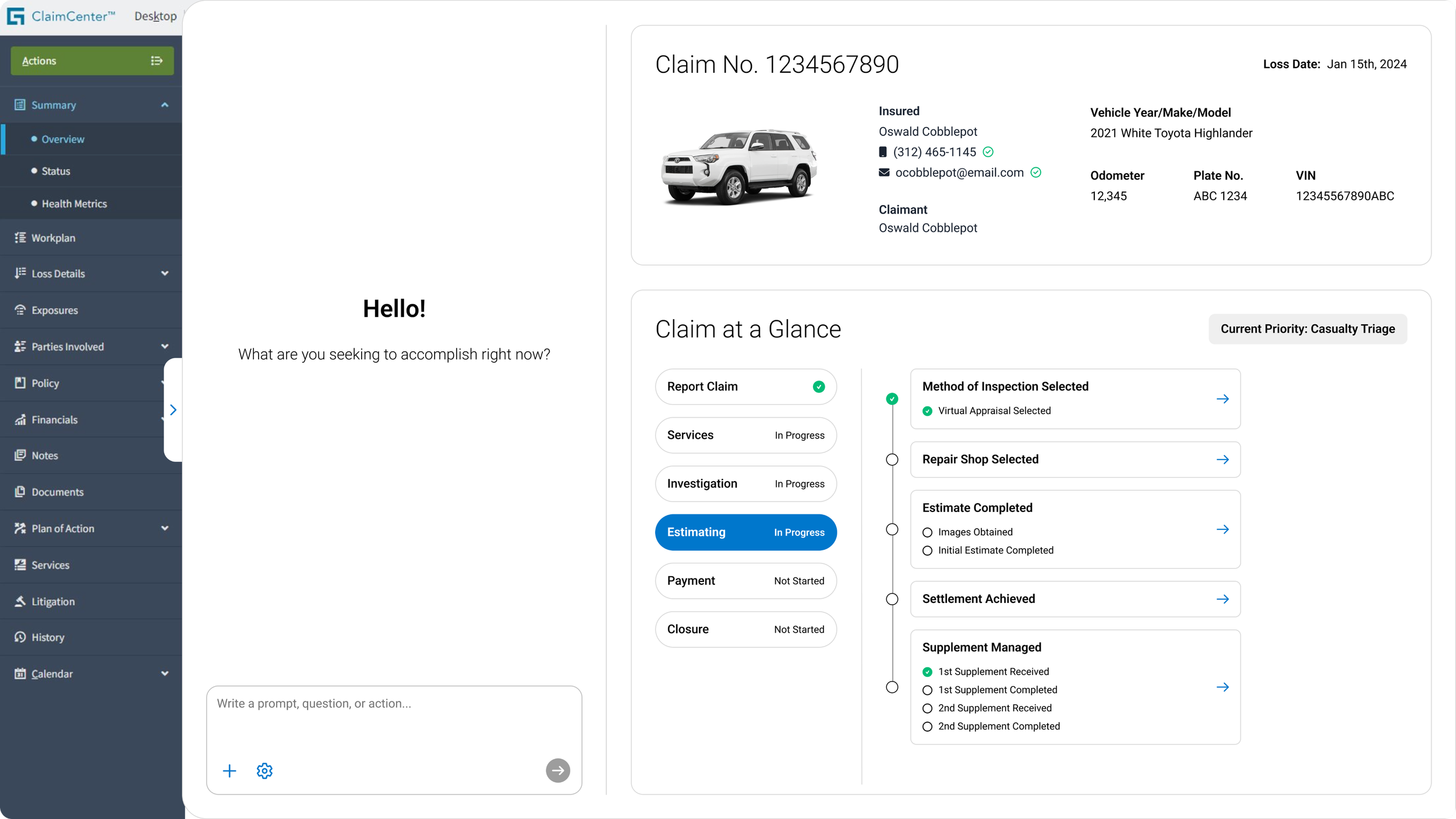
Initial ideas started with a basic AI assistant chat functionality coupled with a basic summary and breakdown of the current claim’s progression in the process.
Ideas evolved further into the structuring of AI guidance and how we can use AI consistently across the product. The facts/insight/guidance/action paradigm was fleshed out here.
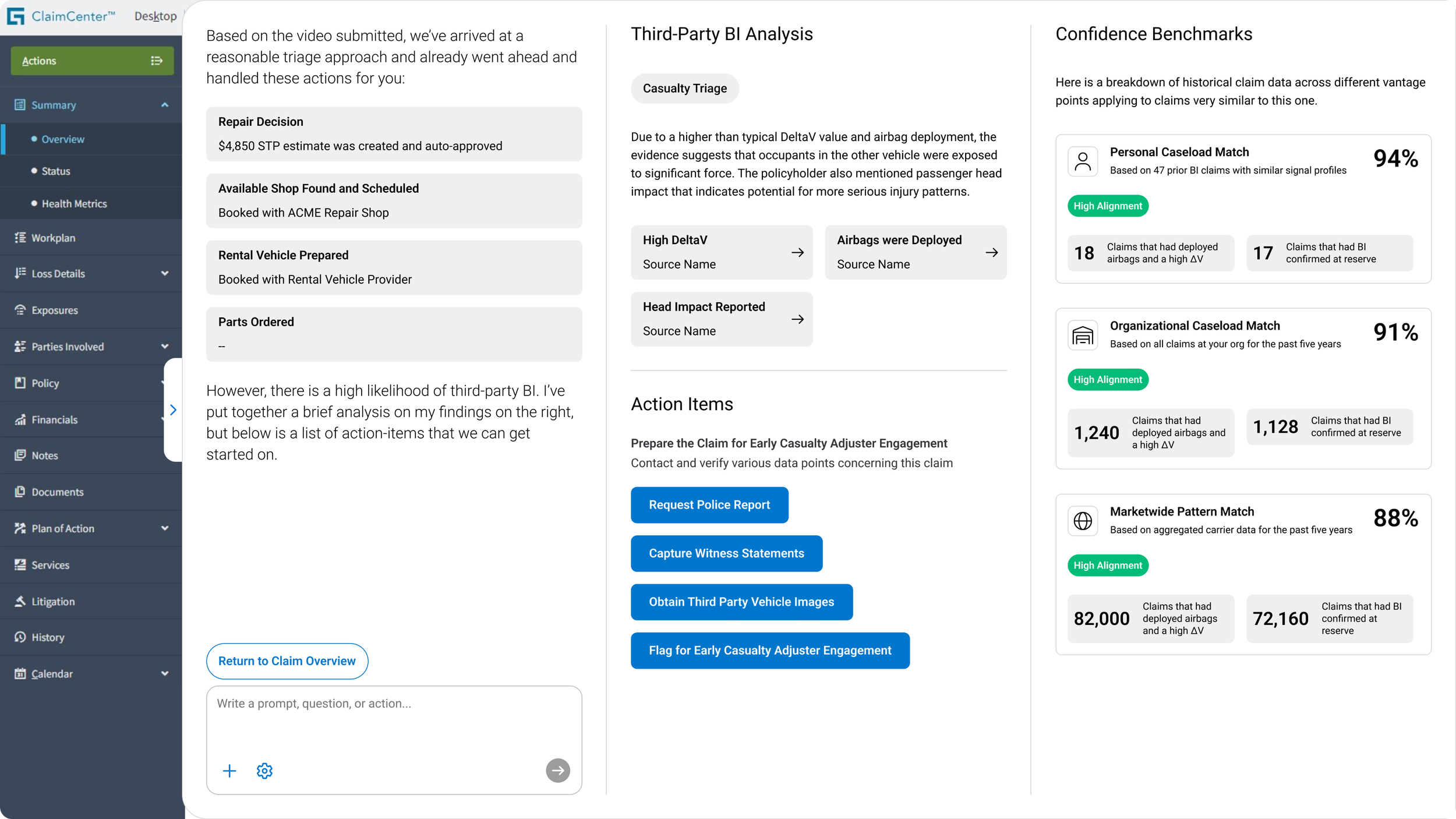
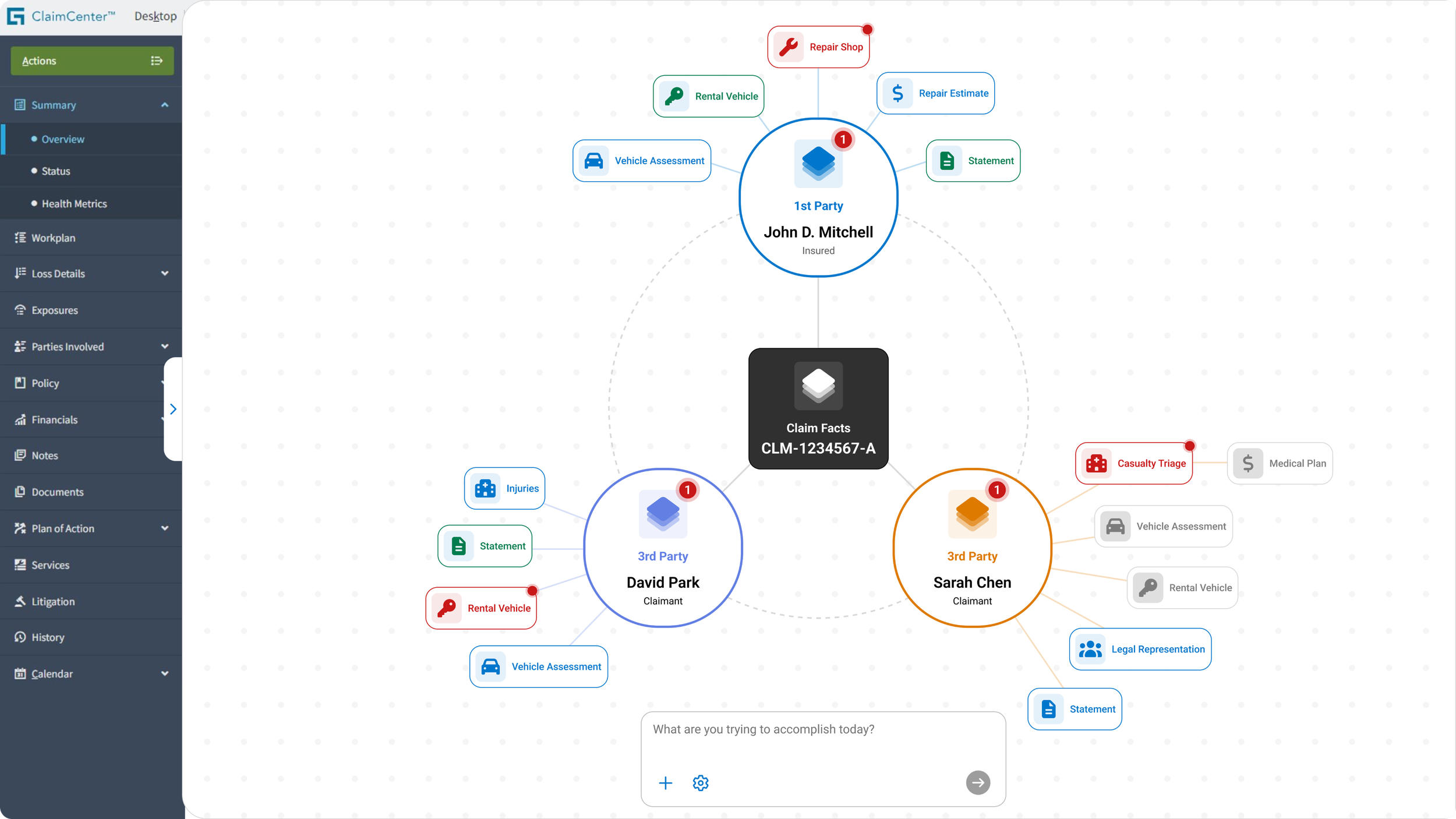
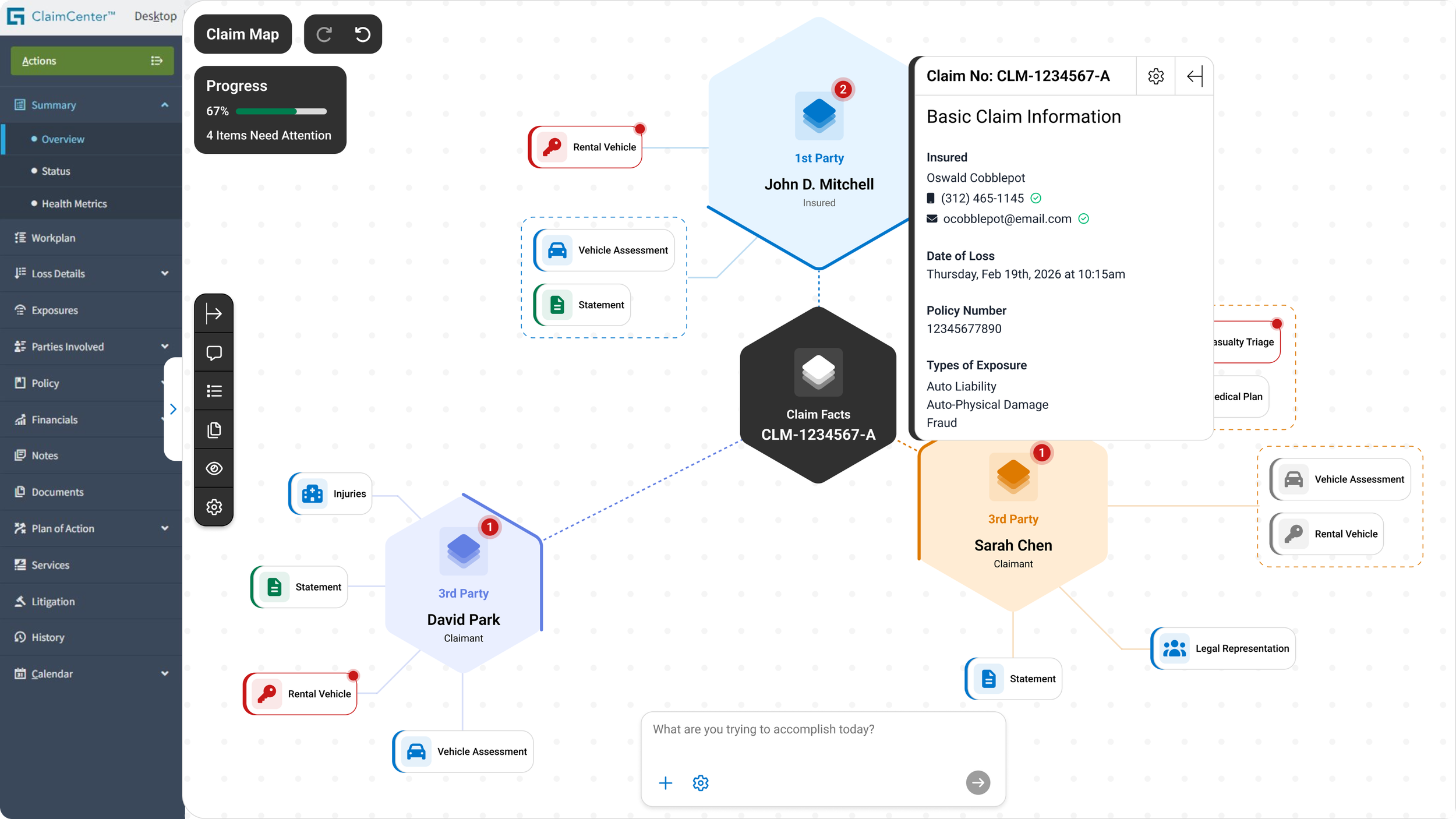
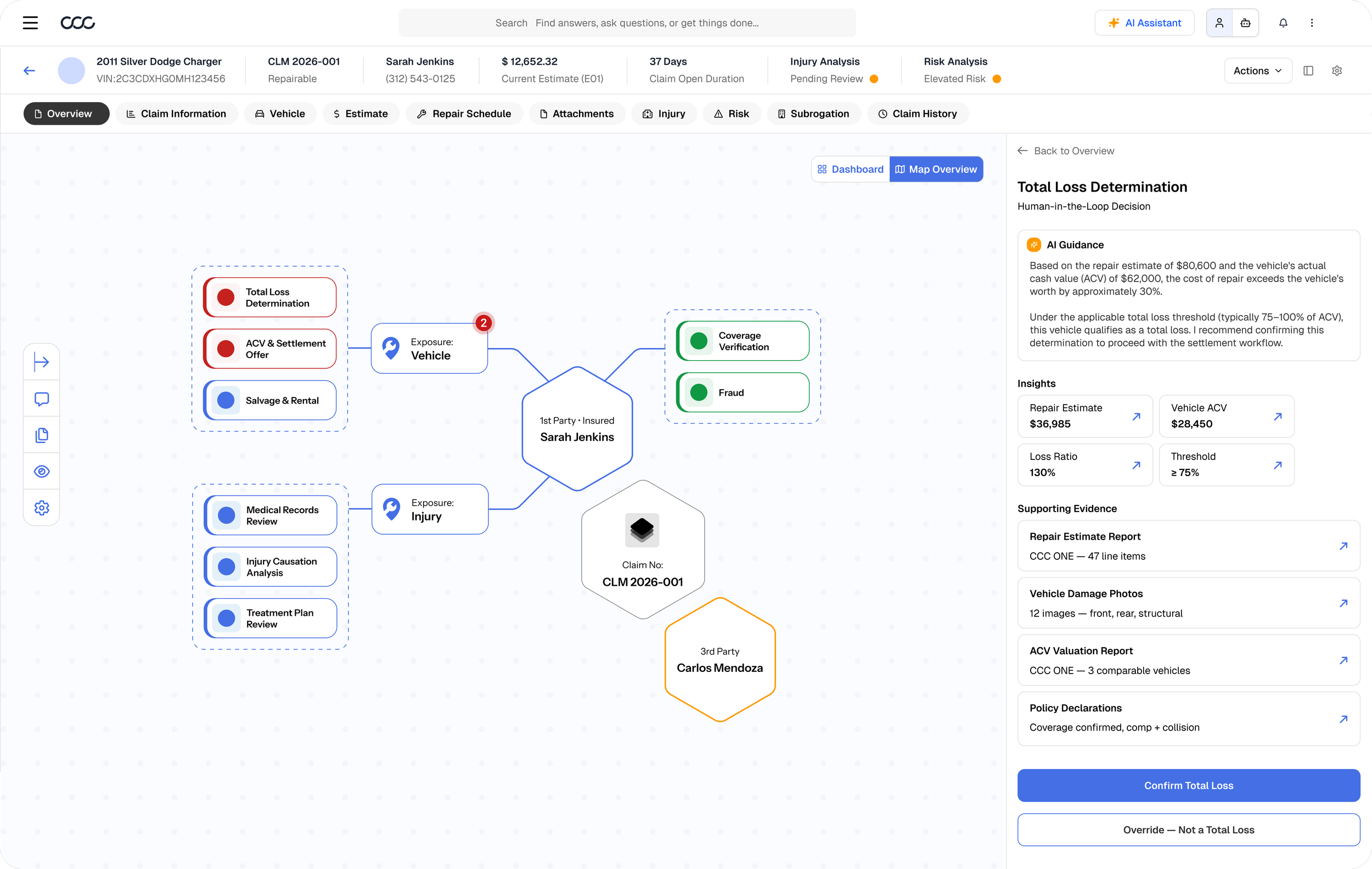
A new visualization for the status and state-based updates of a claim was created. Instead of using a drawer system to slice up the sections of a claim based on business slices, the claim map contextualizes things based on the parties involved and their exposures a.k.a financial risks that are covered by insurance policy.
The presentation and navigation of the claim map were developed more to increase clarity while still conveying a professional level of craftsmanship.
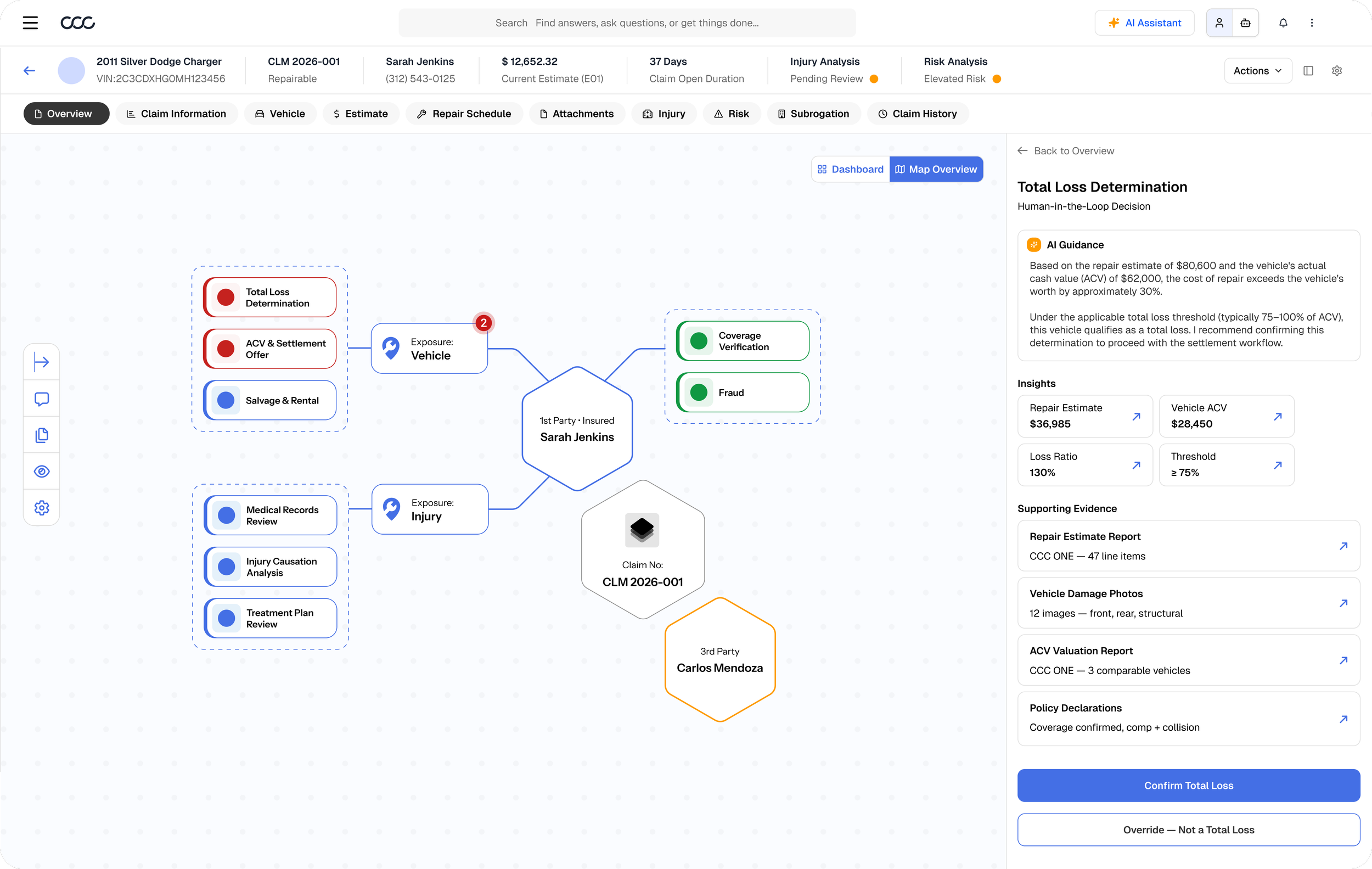
The claim map was integrated into the platform’s newly designed claim folder template to combine the new design system’s components and navigation structure with this new way of examining a claim.
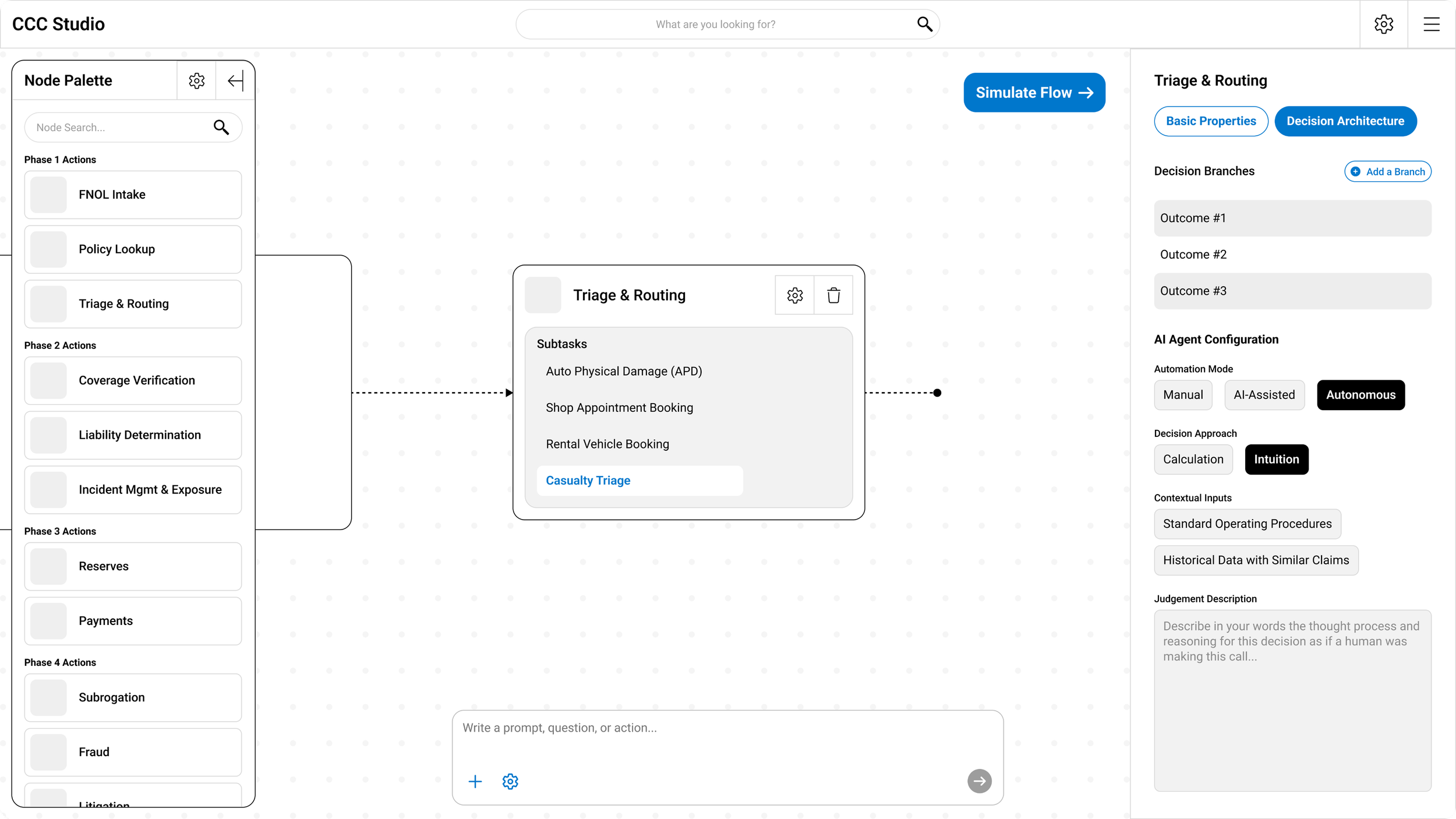
How an insurance executive configures how AI is leveraged in their workflows was another major part of the design system exploration. The claim map translated into the configuration tool, which shows every decision made in the claims process and offers ways to edit the settings for how involved AI is in the decision.
Leveraging AI to build prototypes
The configuration tool, CCC Studio, was also created with AI tools and was used to convey in much greater detail the concept to internal stakeholders and developers.
The Claim System Map and how it navigates AI generated automation and guidance is featured here. Code produced from this prototype were used for the real demo by developers.
AI tools Figma Make and Claude Code were used to collaborate with the development team on making these concepts a reality. I used AI tools to create higher fidelity prototypes that show more nuanced microinteractions and longer workflows much more quickly; the code produced by AI was handed off to development where they could pull the AI-generated code and get a head start on implementation.
An Ever Evolving Design System
The design system work I am helping lead not only encompasses proposing UIUX changes that touch the face of the company, but also serves as a blueprint for exploring how AI can be incorporated into our product lifecycle.